
Get the Signatures
Clinical narratives, Galloway's protocol, and the context that was never reimbursable
As a paramedic, I was inside people’s homes. I saw the lives they actually lived, not the public versions they brought to a clinic. I saw the apartment with no heat in January, the fridge with nothing in it, the high-rise where a broken elevator meant a patient with COPD had not left the twelfth floor in two weeks. I saw social determinants of health before I had a name for them.[1]
The patient care report had fields for chief complaint, vital signs, medications, and procedures performed. It had two signature lines. One authorized payment. The other confirmed we had brought the patient to the hospital. That was it. The form did not have a field for “patient has no heat.” It did not have a field for “patient’s only food is what the neighbor brings.” It captured a transaction and a delivery, and had no corresponding field for what actually mattered. Get the signature. Move on.
I wrote what I saw in the narrative section, the only free text field on the form. Nobody queried those notes. Nobody read them at scale. The documentation existed, technically. The system was not designed to see it.
I did this for nearly a decade. Long enough to absorb everything the people around me believed about the patients we were seeing.
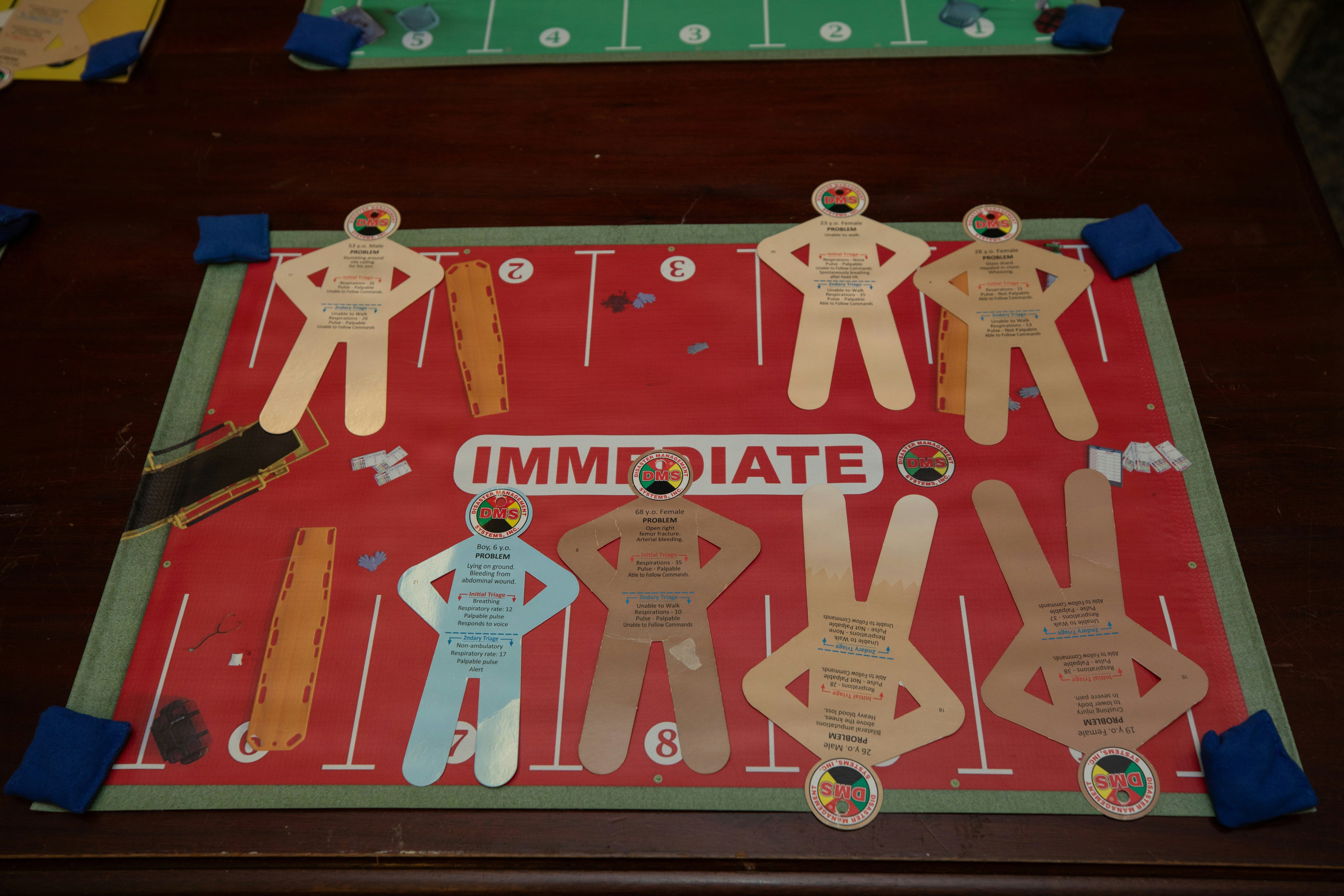
There was a piece of EMS lore that everyone repeated. People on Medicaid called 911 and used the ambulance as a free ride to the hospital. Some of the lore was true enough on its surface. People did call 911 thinking they would be seen faster. And for a lot of people on Medicaid, the ambulance literally was a free ride, one that did not require bus fare or a taxi or tying up the only vehicle the family had. But the version I heard in the break room went further: they were gaming the system, exploiting Medicaid, using ambulances as taxis.[6] I heard it on scenes and during training. I repeated it myself.
This is the part of the story where I am supposed to say I questioned the narrative. I didn’t. The lore felt true because it matched what I could see from my position in the system, and my position in the system included my own life. I had never worried about a co-pay. I had never chosen between a shift and a sick kid. I had never lost sleep over whether missing a day of work meant losing the job entirely. My lived experience was so far from what my patients dealt with that I had no frame for what I was looking at.
And their experience could not see mine: the packed emergency rooms, the long wait times, the angry triage nurses, the overwork that made every call feel like one more demand on a system already breaking. Neither of us could see the other’s reality. The system made sure of that.
I was there at 2 AM when someone with the flu wanted an ambulance to the emergency room. From where I stood, the pattern was obvious. From where I stood, the system felt normal.
When I first got access to Medicaid data, years later and in a completely different role, that was one of the first questions I brought to it. My field experience gave me the hypothesis. The data was supposed to confirm what I had seen.
It did, but not the way I expected. The free rides were there. The pattern was there. It was so much bigger than what I could see from the ambulance. What the data showed me was not the what, which I already knew, but the why. Housing insecurity. Food insecurity. Untreated chronic conditions. The doctor’s office that closes before they get off work, the job they cannot miss because losing it while sick is the actual emergency, the kids with no childcare, the co-pay they cannot cover even if they could get an appointment. Every record was optimized to capture the what, because the why was not reimbursable.
They were not gaming the system. Calling 911 was not the first move. It was the last resort. The system was not designed for the emergencies they were living, and we had a word for that. We called it non-compliance.
Data is not the plural of anecdote.[2] One patient’s 911 call connected to reimbursement policy, scheduling design, access barriers, and transportation infrastructure that shaped everything upstream. EMS was built for acute events: chest pain, car accidents, cardiac arrest. The people calling at 2 AM were experiencing chronic emergencies that no intake form had a category for. The call was the symptom. The architecture was the condition.

I have argued before that a folder structure is a rhetorical argument, and that whoever designs the protocol designs the control, whether they think of it that way or not. A patient care report is the same kind of argument, made in a setting with much higher stakes. The fields on the form are not neutral containers waiting for information. They are pre-decisions about what the clinician is allowed to notice on behalf of the system, made by whoever designed the template and enacted on every patient the form will ever touch. Limiting choices is how an institution exercises governance at the point of capture. The PCR’s blindness to “patient has no heat” was not an oversight. It was a governance decision, made before I ever rang the doorbell.
Every clinical encounter produces two records. The structured record is the one the billing system reads: codes, checkboxes, dropdown values, the fields that map directly to a reimbursement rule. The unstructured record is the one the clinician writes for themselves: the narrative note, the history of present illness, the free text field where everything that does not fit in a dropdown still has to go somewhere, because the clinician needs to remember it tomorrow.
When those two records diverge, the divergence lives in the narrative. The billing system is blind to it. The clinician’s memory depends on it. The signal that actually predicts the outcome is written down, every time, in a field no billing system touches.
The form captures the what. The note carries the why.
ICD-10 even has the vocabulary. Z codes for social determinants of health: Z59 for housing problems, Z56 for employment, Z55 for education and literacy, Z60 for social environment.[3] The categories exist. The classification is precise. Nobody uses them because they are not reimbursable. A hospital cannot bill Medicare for documenting that a patient has no heat. The fault line between what gets measured and what actually matters runs through the form design itself. The codes exist. The reimbursement does not. The narrative note carries the load.
The free text note is the load-bearing wall of the healthcare system, and it is invisible.
Graham Harman, the philosopher behind object-oriented ontology, has a name for this. He says objects withdraw: “No relation, description, or encounter exhausts what the object is.”[4] Every object holds something in reserve that no single vantage point can access. This is not a failure of observation. It is a feature of reality.
The patient’s lived experience withdrew from the billing system. The social determinants withdrew from the structured fields. The narrative note was the only surface where the signal was visible, and for most of the history of electronic health records, nobody could read those notes at scale because nobody had a tool that could.
Ian Bogost extends Harman into a method he calls carpentry: making things as a way of understanding. Years after EMS, I built NLP pipelines to extract social determinants from clinical text at the University at Buffalo. The pipeline was my carpentry. I did not learn what the notes held by reading about them. I learned by building the thing that had to read them.
What I learned was that rule-based NLP and the classical machine learning that came after it could reach the note, but only with a map. You had to tell the model in advance what to look for. Train it on housing insecurity and it found housing insecurity. Train it on medication adherence and it found medication adherence. What it could not do was surprise you. Which is the problem, because the whole reason the free text field exists is to hold the thing the form did not anticipate.
Large language models read clinical text differently. They do not need a map. They read the way a clinician reads: following context across paragraphs, inferring from indirect language, catching the detail that matters without being told in advance what the detail is. A patient who writes “I ran out of insulin last week” in response to a question about medication adherence is saying something about cost, about pharmacy access, about insurance churn, about all of it at once. Rule-based NLP could catch “ran out of insulin.” A language model can catch what it means.
This is not a claim about hype. The capability shift is narrow and specific, and it is finally the right shape for the problem. The note was always the richest surface. The technology to read the note at scale is new. For the first time, the thing that was designed not to be seen can be seen.
But the problem was never only that the note was unreadable. Healthcare claims and patient care reports capture what is important to the system, not what is happening inside it. That is the same problem machine learning has had since the beginning: a model trained on billing data learns what got billed, not what happened to the patient. The training set encodes a perspective and mistakes it for the ground truth. The bias is not in the algorithm. It is in the record. And now, as organizations assemble context for language models, the question moves again: who decides what the model is allowed to see? A context window is a form field at a different scale. Whoever assembles it is making the same choice the form designer made, just faster and with less visibility.
I am currently working with a research group at a university medical center on exactly this: extracting signal from clinical narratives that a billing system was never designed to capture. The paramedic who wrote “patient has no heat” in 2005 did not know anyone would ever read that note. The informatics researcher who built NLP pipelines at Buffalo in the 2010s could read it if he knew what to look for. The work I am doing now reads it without needing to know in advance. Same note. Three moments. The wall is no longer invisible.
I used to think the problem was that we lacked the technology to see what mattered. We have the codes. We have the NLP. We have the models. We have had the Z codes since ICD-10 was adopted. The technology was never what was missing. It was the decision that the information was worth capturing, and that decision was always an incentive structure, embedded in the form fields, the billing codes, the reimbursement rules, the funding model. When the incentives pointed one way and the need pointed another, the system served the incentive. The people inside could not see what was missing because nothing felt missing. It just felt like the job. It felt like getting the signature.
What has changed is the cost of seeing. Reading clinical narratives at scale is no longer a research project. It is a capability any serious healthcare organization can deploy this year. For thirty years, the institutions that built the billing architecture had a technical alibi. The narrative field was unreadable at scale, so nothing had to change, and the governance decision embedded in the form design could hide behind the limits of the tooling. The alibi is gone now. What remains is the question the alibi was covering: the system was designed not to see social determinants because someone, at some point, decided the institution did not need to know. Alexander Galloway’s Protocol has a subtitle that is also its thesis: How Control Exists after Decentralization.[5] In healthcare, the standards layer where that control lives is the form design, the code set, and the reimbursement rule. LLMs do not change what the standards layer decided. They take away the cover it has been hiding behind.
Get the signature. Move on. That was the protocol in 2005. The protocol was a choice. It still is.
[1] Social determinants of health refer to the conditions in which people live, work, and age, including housing, food security, transportation, employment, and social support, that shape health outcomes at least as much as clinical care does. Community paramedicine programs now deploy paramedics specifically to address these factors, connecting frequent 911 callers with social services instead of transporting them to the ED. San Antonio’s program stabilizes patients by buying them food and picking up their medications. The fact that EMS is now formally doing the work that individual paramedics were doing informally, seeing the whole patient rather than just the chief complaint, is both progress and an indictment of how long it took.
[2] The phrase “data is not the plural of anecdote” is usually attributed to Raymond Wolfinger, a political scientist at Berkeley, though what he actually said was the opposite: “the plural of anecdote is data.” His point was that systematic collection of anecdotes becomes evidence. The common inversion makes the opposite claim: that individual observations, no matter how vivid, do not constitute evidence without systematic validation. Both versions are true. My experience was data, of a kind. It was also dangerously incomplete.
[3] The full ICD-10-CM Z code range for social determinants: Z55 (education and literacy), Z56 (employment), Z57 (occupational exposure), Z59 (housing and economic circumstances), Z60 (social environment), Z62 (upbringing), Z63 (family circumstances), Z65 (legal and incarceration). CMS has expanded guidance on Z code reporting multiple times since 2020. Usage has increased but remains marginal compared to clinical codes, because the economic incentive to document social factors still does not match the effort required to capture them. The codes exist. The reimbursement does not.
[4] Graham Harman, Object-Oriented Ontology: A New Theory of Everything (Pelican, 2018). Harman’s core claim is that objects always hold something in reserve: no relation, description, or encounter exhausts what the object is. He calls this withdrawal. Ian Bogost extends this into a method he calls carpentry: making things as a way of understanding. I drew on Bogost’s Alien Phenomenology in “What Is It Like to Be a Document?”.
[6] I say “break room” but we rarely got breaks in one comfortable spot. We stood by on street corners as part of system status management. We did hot shift changes in gas station parking lots. We stood in line at triage for hours waiting for beds to open. The lore traveled in all of those places.
[5] Alexander Galloway, Protocol: How Control Exists after Decentralization (MIT Press, 2004). Galloway defines protocol as “a technique for achieving voluntary regulation within a contingent environment.” The clinician fills out the PCR voluntarily. The environment is contingent. The regulation is in the form design. His broader thesis is that in decentralized systems, control migrates into the standards layer. The internet is his primary example: no single authority governs the network, but TCP/IP and the specifications built on top of it determine what the network is and is not allowed to do. A healthcare billing system is decentralized in the same sense. No single authority writes every form field or chooses every code. But the standards layer, which in this case is ICD-10, CPT, the reimbursement schedule, and the EHR template library, encodes the decisions about what the whole system is allowed to know. I made the same argument about SharePoint governance in “Governance Is Rhetoric”. The object changes. The mechanism does not.